
MENA-Adapted Guidelines for Aneurysmal Subarachnoid Hemorrhage: A Regional Approach to Global Evidence MENA-Adapted Guidelines for Aneurysmal Subarachnoid Hemorrhage
Article Sidebar
Main Article Content
Abstract
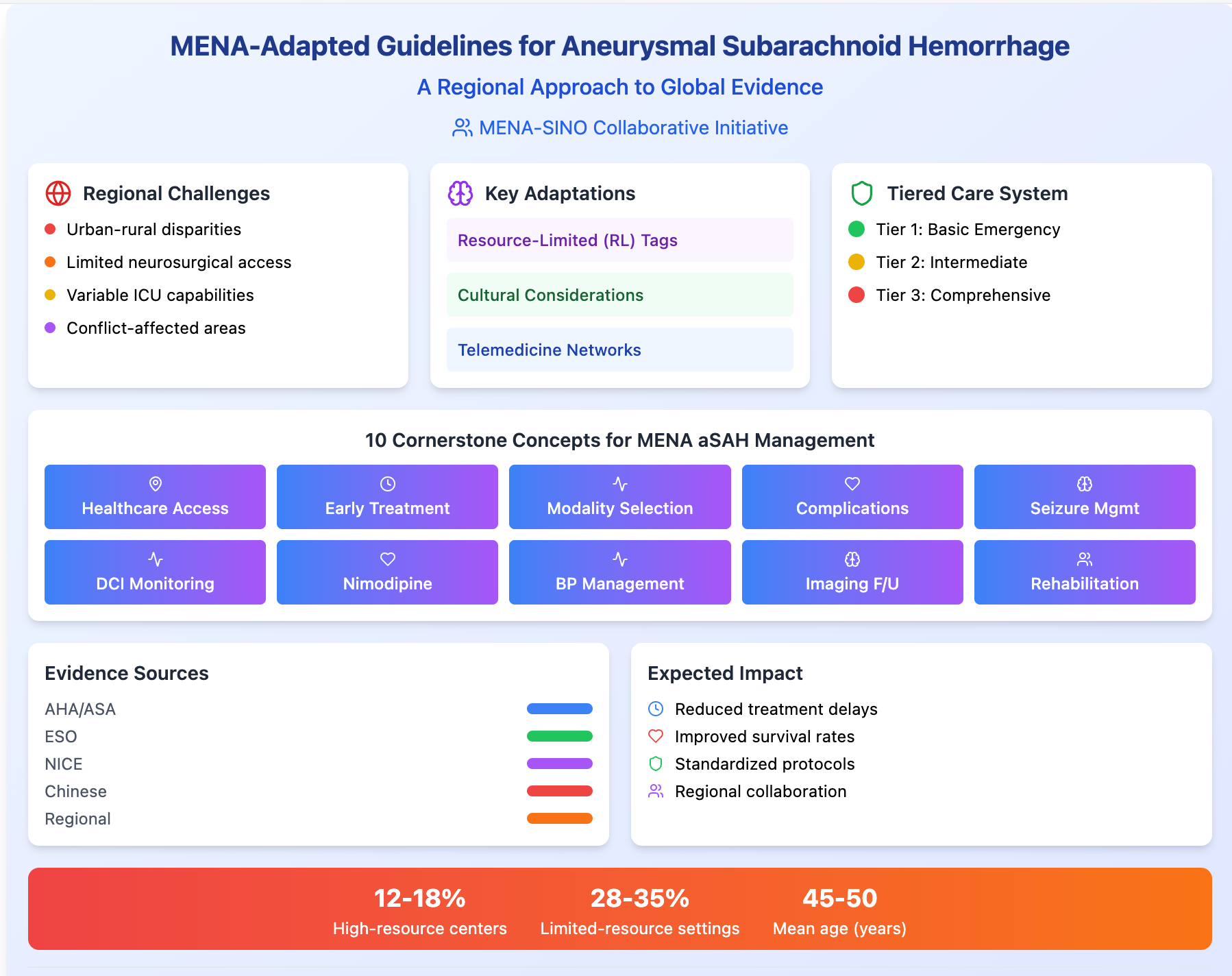
Background: Aneurysmal subarachnoid hemorrhage (aSAH) management across the diverse healthcare landscapes of the Middle East and North Africa (MENA) region requires evidence-based guidelines adapted to varying resource levels. The MENA Stroke and Interventional Neurotherapies Organization (MENA-SINO) developed these guidelines to address critical regional challenges while maintaining core principles of care.
Methods: We adapted evidence from multiple international guidelines (AHA/ASA, ESO, NICE, Neurocritical Care Society, Chinese guidelines) using a systematic approach including: comprehensive evidence review, multidisciplinary expert panel input, regional implementation barrier assessment, and formal consensus procedures. Recommendations employ MENA-SINO's framework with modified Class of Recommendation, Level of Evidence, Resource-Limited designations, and Expert Opinion statements where appropriate.
Key Recommendations: Our regional roadmap emphasizes: (1) telemedicine networks to overcome geographical barriers to specialized care; (2) early aneurysm treatment with protocols for settings where transfer is delayed; (3) balanced approach to treatment modality selection considering variable regional expertise; (4) tiered management of medical complications adapted to different resource levels; (5) pragmatic seizure management considering medication accessibility; (6) standardized neurological monitoring protocols across all settings; (7) approaches to optimize nimodipine administration despite supply challenges; (8) blood pressure management adapted to variable monitoring capabilities; (9) individualized follow-up imaging based on local resource availability; and (10) multidisciplinary rehabilitation with family-centered approaches where formal services are limited. Conclusion: These guidelines provide a resource-stratified framework for aSAH management across the MENA region, with practical adaptations that address the realities of diverse healthcare settings while preserving essential care components. Implementation priorities and cost-effectiveness considerations further enhance their practical utility.
Downloads
Article Details

This work is licensed under a Creative Commons Attribution-NonCommercial-NoDerivatives 4.0 International License.